

 FOR INTERNATIONAL PATIENTS










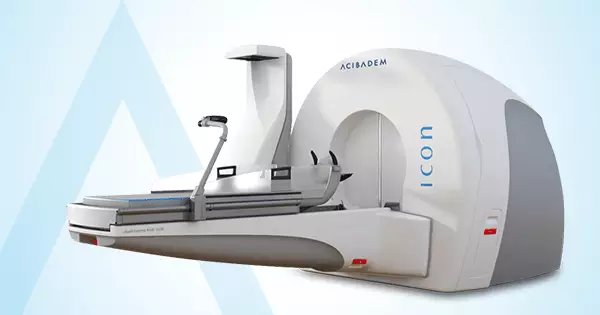
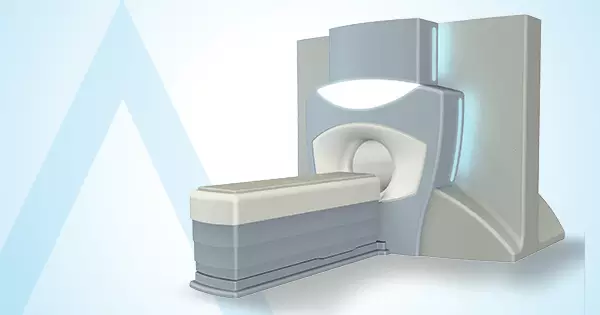




Whole Body MRI is one of the most recent imaging techniques and it is used for diagnosing tumors in early stage. Whole body is scanned in approximately 40-45 minutes. Patients are not exposed to radiation in Whole Body MRI scans, as is the case with other MRI scans.
Although MRI has been used, to date, for suspected lesions, specific software is developed that enables cross-sectional imaging of whole body in a single session.
This method aims to diagnose tumors in various organs of the body, including brain and neck, in early stages, before they grow and spread.
Whole Body MRI complements routine check-up in patients with high risk of cancer or concerns.MRI (Magnetic Resonance Imaging) is an imaging technique which is commonly used for many years to diagnose various diseases and follow up diseases after treatment. Today, MRI can also be used for check up in people with no apparent sickness or complaint.About Whole Body MRI:
- Whole Body MRI is a supplementary advanced check-up model for individuals who have check-up at regular intervals due to risk or concern regarding cancer.
- Whole body, including brain and neck, is imaged in a single session.
- It can be used for check-up. Although MRI has been, to date, scanned only for suspected lesions, it can, now, scan whole body in a single session.
- This imaging modality usually scans the body at 5-mm intervals and next, digital data is processed into a single image by an automatic software program. Images are acquired in approximately 45 minutes
- Whole body MRI aims to get information before signs and symptoms emerge and tumor spreads. This test is also an option for people with family history of a tumor.
- It is recommended to combine this modality with conventional screening to detect breast, lung, prostate and gastrointestinal tumors in early stage.
Which Organs Are Scanned With Whole Body MRI?
- Whole Body MRI scans start in brain. Next, the neck, lungs and chest wall are imaged.
- The procedure continues with the evaluation of liver, pancreas, kidney, adrenal gland and other intra-abdominal organs as well as urinary bladder.
- Prostate and testicles are scanned in men, while uterus and ovaries are imaged in women. Moreover, bones and muscles (excluding arms) above knee level are assessed in the same session.
- It needs to be combined with other conventional screening tests in order not to miss signs of an early-stage disease, when lung, breast, prostate and gastrointestinal tumors are screened.
- For a Whole Body MRI scan, patients wear metal-free clothing or patient gowns that meet relevant requirements of MRI. A device, called coil with integrated receiving antenna, is placed on the patient. The scanning process is identical to a routine MRI scan.
- Whole body is scanned, starting in brain, pursuant to a predetermined program, while the patient stays still and patient table of MRI scanner moves.
- Patients are ordered to lie down still on MRI table for 45 minutes.
- Patients are instructed to hold breath no more than 20 seconds while abdomen and chest are scanned.
Similar Interests
Hospitals
-
![Adana Hospital]() Adana Hospital
Adana Hospital -
![Altunizade Hospital]() Altunizade Hospital
Altunizade Hospital -
![Atakent Hospital]() Atakent Hospital
Atakent Hospital -
![Ataşehir Hospital]() Ataşehir Hospital
Ataşehir Hospital -
![Bakırköy Hospital]() Bakırköy Hospital
Bakırköy Hospital -
![Bodrum Hospital]() Bodrum Hospital
Bodrum Hospital -
![Bursa Hospital]() Bursa Hospital
Bursa Hospital -
![Eskişehir Hospital]() Eskişehir Hospital
Eskişehir Hospital -
![Fulya Hospital]() Fulya Hospital
Fulya Hospital -
![International Hospital]() International Hospital
International Hospital -
![İzmir Kent Hospital]() İzmir Kent Hospital
İzmir Kent Hospital -
![Kadıköy (Dr. Şinasi Can) Hospital]() Kadıköy (Dr. Şinasi Can) Hospital
Kadıköy (Dr. Şinasi Can) Hospital -
![Kartal Hospital]() Kartal Hospital
Kartal Hospital -
![Kayseri Hospital]() Kayseri Hospital
Kayseri Hospital -
![Kozyatağı Hospital]() Kozyatağı Hospital
Kozyatağı Hospital -
![Maslak Hospital]() Maslak Hospital
Maslak Hospital -
![Taksim Hospital]() Taksim Hospital
Taksim Hospital















Services
FAQ
What is Whole Body MRI Check Up?
It implies an MRI modality that is recently used for screening and recommended to complement standard check-up in healthy individuals.
How long does Whole Body MRI Check-up last?
Whole Body MRI Check-up is completed in approximately 45 minutes.
Can Whole Body MRI replace Mammography?
Mammography and Breast Ultrasound are preferred in screening to detect breast cancers at the earliest stage. Whole Body MRI protocol may only identify tumors that are larger than a certain size, as a time-consuming contrast-enhanced imaging protocol is not available for detailed evaluation of breasts. Detailed examination with centralized contrast-enhanced MRI of breast is recommended for high-risk cases or when necessary.
Can Whole Body MRI replace Prostate Screening?
Prostate tumors can be identified with Whole Body MRI, after they reach a certain size and different appearance. However, laboratory tests (PSA) and clinical examinations are strongly recommended to detect prostate tumors in earlier stages. Multi-parametric Contrast-Enhanced Prostate MRI is recommended for high-risk and necessary cases.
-
Can Whole Body MRI replace Thyroid Ultrasound?
Thyroid tumors can be identified with Whole Body MRI, after they reach a certain size and different appearance. However, Thyroid Ultrasound is more sensitive for far smaller and high-risk nodules. Biopsy may be recommended for necessary cases following an ultrasound test.
Can Whole Body MRI replace Gastroscopy and Colonoscopy?
Whole Body MRI may identify tumors in stomach, small intestine and colon, if they are larger than a certain size. However, gastroscopy and colonoscopy are must for early diagnosis in high-risk patients.
Which is more sensitive in lung cancer screening, Whole Body MRI or Computerized Tomography?
Computerized Tomography is the most effective method in early diagnosis of lung tumors. Low-dose CT scan is recommended for high risk patients.
Can Whole Body MRI be used in lung cancer screening?
Whole Body MRI can demonstrate a lung tumor, if it is larger than 1 cm.
How about recommended intervals of Whole Body MRI Check-up?
It can be repeated annually in routine Check-Up tests.
What is the amount of radiation exposure in a Whole Body MRI scan?
Your body is not exposed to radiation in Whole Body MRI.
Is there an age limit for Whole Body MRI?
It is an option for everybody with no medical contraindication who can stay still in the MRI scanner or do not have MRI-specific contraindication.
Does Whole Body MRI require specific preparation?
An eight-hour fasting is recommended to image stomach and small intestines better. Patients are not instructed to stop drinking liquids and it does not require urinary urge.
Are IV contrast media used in Whole Body MRI?
Use of contrast media is not preferred in Check-up tests. Contrast-enhanced sequences can be run in another session, if a high-risk lesion is detected or it is necessary to characterize the lesion. Contrast-enhanced sequences increase sensitivity in patients with high-risk of cancer.
Does Whole Body MRI demonstrate every lesion in body?
There are some basic factors to demonstrate a lesion in a radiology study: these are size of lesion, origin of tumor or unique contrast uptake by tumor relative to the organ. While the sensitivity of radiology studies varies depending on location and type of lesion, those originating from parenchymal organs are easily detected, when they are over 1 cm in size.
Is Whole Body MRI Device different from other MRI devices?
1.5- or 3-Tesla MRI scanners can be used for Whole Body MRI. Whole body equipment is integrated and software installed to these scanners.
Can Whole Body MRI replace Cervical Cancer Screening?
Whole Body MRI can demonstrate endometrial and cervical cancers only if they are larger than certain size and create unique MRI signals. However, PAP smear is strongly recommended for early diagnosis in high-risk cases, as it is the most effective screening test.
What is the upper weight limit for Whole Body MRI checkup?
While height-weight ratio is important, the procedure is generally appropriate for patients with body weight up to 160 kg.
Can general anesthesia be administered for claustrophobic people?
Physicians do not prefer a check-up under anesthesia, as quality of MRI images will decrease.
Can Whole Body MRI Demonstrate Herniated Cervical and Lumbar Discs?
Although Whole Body MRI does not primarily aim to demonstrate herniated lumbar disc, the spinal pathology protocol may reveal out evident disc degenerations and herniations. Detailed MRI of spine and spinal cord might be necessary, if further details are required or patients have relevant complaints.
Can Vascular Diseases be detected?
Whole Body MRI is designed for cancer screening and standard scans do not include vascular screening programmes. Cranial MRI Angiography that lasts about 5 minutes can be scanned, if request by patients, to investigate risk of cerebrovascular aneurysm – a balloon-like dilatation of blood vessels in brain accompanied by risk of bleeding. Multi-slice Coronary CT Angiography is recommended for patients with risk of or concerns about coronary artery disease.
Who cannot undergo MRI?
A preliminary discussion is required for patients who are claustrophobic, have a metal implant with unspecified MRI compliance and do not have past history of MRI. Patients with pacemaker (non-MRI compliant) and patients with history of cerebrovascular aneurysm clips placed before 1990 should strictly avoid MRI scans.
Who are not recommended?
This screening test is recommended for individuals with poor overall health and those who cannot lie down in MRI device for 1 hour, cannot cooperate during the scan, have a complaint which requires detailed information regarding a specific disease or body part.


